
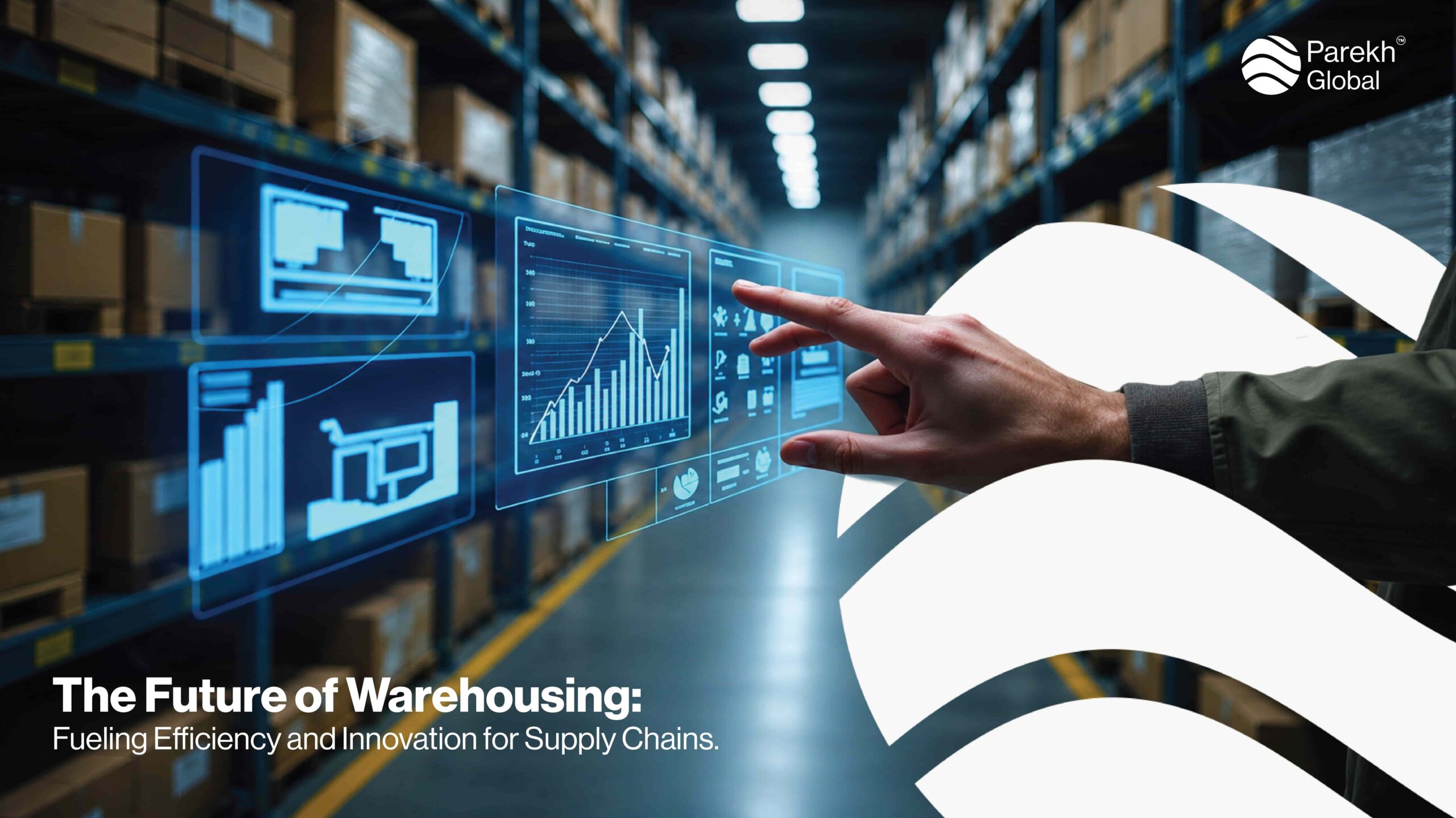
The Future of Warehousing: Fueling Efficiency and Innovation for Supply Chains.
Warehouses have always been a vital part of the supply chain, serving as the bridge between production and consumption. However, in today’s fast-paced global economy, warehousing has evolved far beyond simple storage. Modern warehouses have become intelligent logistics hubs that improve inventory management, streamline operations, and accelerate order fulfillment.
With advancements in automation, artificial intelligence (AI), the Internet of Things (IoT), and warehouse management systems (WMS), businesses can now achieve greater operational efficiency, real-time inventory visibility, and faster delivery times.
As customer expectations continue to rise, modern warehousing plays a crucial role in building agile, resilient, and future-ready supply chains.
Why Modern Warehousing Matters
Efficient warehousing is no longer just about storing products—it’s about optimizing the entire supply chain.
Modern warehouse operations help businesses:
- Improve inventory accuracy
- Reduce order fulfillment time
- Increase operational efficiency
- Enhance supply chain visibility
- Minimize logistics costs
- Support faster customer deliveries
- Enable scalable business growth
By integrating technology and data-driven processes, warehouses have become strategic assets that directly impact business performance and customer satisfaction.
From Storage Facilities to Strategic Logistics Hubs
Traditionally, warehouses functioned as storage locations where goods remained until they were transported to customers or retail outlets.
Today, the rapid growth of e-commerce, globalization, and omnichannel retail has transformed warehouses into dynamic logistics centers that support end-to-end supply chain management.
Modern warehouses now perform multiple functions, including:
- Inventory management
- Order processing
- Picking and packing
- Distribution planning
- Cross-docking
- Reverse logistics
- Value-added logistics services
These capabilities help businesses reduce lead times while improving supply chain responsiveness.
Technology is Revolutionizing Warehousing
Technology has become the driving force behind the evolution of modern warehousing.
Automation and intelligent software are reducing manual effort, minimizing operational errors, and increasing productivity across warehouse operations.
Key warehouse technologies include:
- Warehouse Management Systems (WMS)
- Artificial Intelligence (AI)
- Robotics and automation
- Automated Guided Vehicles (AGVs)
- Barcode and RFID tracking
- Inventory management software
- Cloud-based logistics platforms
- Data analytics and reporting
These technologies enable businesses to improve warehouse accuracy, optimize storage utilization, and make faster operational decisions.
The Rise of Smart Warehouses
Smart warehouses represent the next generation of logistics infrastructure.
By integrating IoT devices, connected sensors, automation, and real-time analytics, businesses gain complete visibility into warehouse operations.
Smart warehouse capabilities include:
- Real-time inventory tracking
- Temperature and environmental monitoring
- Automated stock replenishment
- Predictive demand forecasting
- Intelligent space optimization
- Live operational dashboards
- Performance analytics
With greater visibility and automation, organizations can improve operational efficiency while reducing costs and inventory losses.
AI and Automation in Warehouse Operations
Artificial Intelligence is transforming warehouse management by enabling smarter planning and predictive decision-making.
AI-powered systems help businesses:
- Forecast customer demand
- Reduce overstocking
- Prevent stock shortages
- Optimize inventory levels
- Improve labor productivity
- Enhance warehouse planning
Meanwhile, robotics and automated picking systems accelerate order fulfillment while reducing human error and improving workplace safety.
Sustainable Warehousing for a Greener Future
Sustainability has become an essential focus for modern logistics and warehouse operations.
Businesses are investing in environmentally responsible infrastructure and energy-efficient technologies to reduce their environmental impact.
Green warehousing initiatives include:
- Solar-powered warehouse facilities
- Energy-efficient lighting systems
- Eco-friendly packaging solutions
- Paperless warehouse operations
- Waste management programs
- Climate-controlled storage
- Resource conservation initiatives
Sustainable warehousing not only supports environmental goals but also improves operational efficiency and long-term cost savings.
Warehousing in the E-Commerce Era
The rapid growth of e-commerce has significantly changed warehouse operations.
Consumers now expect same-day or next-day delivery, requiring warehouses to process orders faster than ever before.
To meet these expectations, businesses are adopting:
- Regional distribution centers
- Multi-user warehouses
- Flexible storage solutions
- Automated fulfillment centers
- Last-mile logistics support
- Scalable warehouse infrastructure
These innovations enable companies to handle fluctuating order volumes while maintaining fast and accurate deliveries.
The Importance of Warehouse Management Systems (WMS)
Warehouse Management Systems (WMS) have become essential for efficient warehouse operations.
A modern WMS helps businesses:
- Track inventory in real time
- Improve warehouse productivity
- Optimize storage locations
- Reduce picking errors
- Manage inbound and outbound shipments
- Monitor operational performance
- Generate business insights
By digitizing warehouse processes, businesses gain greater control over inventory and improve overall supply chain efficiency.
Benefits of Modern Warehousing
Investing in advanced warehousing solutions delivers measurable business benefits, including:
- Faster order fulfillment
- Improved inventory accuracy
- Reduced operational costs
- Better supply chain visibility
- Increased warehouse productivity
- Enhanced customer satisfaction
- Greater scalability
- Improved business continuity
- Higher operational efficiency
- Stronger competitive advantage
These benefits make warehousing one of the most strategic components of modern logistics.
The Future of Warehousing
The future of warehousing will be driven by automation, artificial intelligence, robotics, IoT, predictive analytics, and sustainable infrastructure.
As global supply chains become increasingly complex, businesses will continue investing in smart warehouses that deliver greater efficiency, flexibility, and resilience.
Organizations that embrace digital warehouse transformation will be better equipped to meet changing customer expectations while maintaining operational excellence.
Modern warehouses are no longer simply storage facilities—they are intelligent logistics centers that power faster, smarter, and more connected supply chains.
Frequently Asked Questions (FAQs)
What is modern warehousing?
Modern warehousing refers to technology-driven warehouse operations that combine automation, inventory management systems, AI, IoT, and real-time analytics to improve storage, order fulfillment, and supply chain efficiency.
Why is warehousing important in supply chain management?
Warehousing supports inventory storage, order processing, distribution, and logistics coordination, helping businesses improve operational efficiency, reduce delivery times, and enhance customer satisfaction.
What technologies are used in smart warehouses?
Smart warehouses use Warehouse Management Systems (WMS), Artificial Intelligence (AI), IoT sensors, robotics, Automated Guided Vehicles (AGVs), RFID tracking, barcode systems, and real-time analytics.
How does automation improve warehouse operations?
Automation increases productivity, reduces manual errors, improves inventory accuracy, accelerates order fulfillment, enhances workplace safety, and lowers operational costs.
What are the benefits of sustainable warehousing?
Sustainable warehousing reduces environmental impact through energy-efficient infrastructure, solar power, eco-friendly packaging, paperless operations, waste management, and resource conservation while improving long-term operational efficiency.
How has e-commerce changed warehousing?
The growth of e-commerce has increased demand for faster order fulfillment, regional distribution centers, flexible warehouse infrastructure, automated fulfillment systems, and efficient last-mile delivery solutions.